Article

Bridging the knowledge gap – climate change and sustainability

- by
Tags: Featured

To say we live in interesting times seems a bit of an understatement in 2025. Aside from global events, the UK is increasingly experiencing impacts of climate change with related extreme weather events (EWE), such as heatwaves and flooding. These are exacerbating existing geo-related risks and causing damage, both directly and indirectly. The UK Government and the devolved administrations are committed to responding to the risks posed by climate change not least as part of the transition to a net zero nature positive economy.  This presents both challenges and opportunities for the brownfield and construction sectors.

SiLCs Climate Change and Sustainability (CC&S) Sub-group was launched in March 2023 with the encouragement of then PTP Chair Dr Tom Henman, to address a potential gap and look ahead to what SiLCs would need to be able to advise on in the future.  We had no idea how quickly this would become mainstream as an essential and indeed urgent part of our work; LCRM now embeds the principles of sustainability and the need throughout to consider climate change when assessing and managing risks from land contamination; other standards being updated and new technical guidance increasingly reference the need to consider sustainability and climate change issues.

The brownfield sector has a key role to play in achieving more sustainable development, adapting to climate change and enhancing biodiversity. Those of you who attended the excellent 2025 SiLC Annual Forum will have heard the insightful presentation by Andrew Fellows of RSK Geosciences on their work developing CIRIA good practice guidance for the development sector focussing on how climate change and EWE affect geo-related risks. The related survey clearly highlighted awareness of and concern about the impact of processes such as flooding, erosion and slope stability that are made worse by EWE.  In the finance sector, asset owners and insurers are increasingly concerned about what they term the ‘physical risks’ arising from climate change and potential for the stranding (unanticipated or premature write-downs, devaluations or conversion to liabilities) of assets not to mention the legal risks related to changes in policy and regulation.

The CC&S Sub–group’s principal aim is to build knowledge, capacity and capability in climate change and sustainability considerations for land condition within the SiLC community whilst supporting the development of and promoting good practice in sustainable development, aiding the UK’s journey to Net Zero.  It also aims to link with complementary groups within SiLCs member bodies (including AGS) and beyond to share knowledge and avoid duplication of effort. The Sub-group is currently collating resources to help equip SiLCs for the challenges they will be facing, be that to address climate change impacts, support material reuse, or reduce GHG emissions arising from remediation schemes.  These resources will be accessible to all SiLCs through our new website:  Specialist in Land Condition Register Ltd (SiLC) when it is launched.

The CC&S Sub–group also invites speakers working at the leading edge of this area. For example, at our February 2025 meeting, Dr David Manning, Professor of Soil Science at Newcastle University presented his pioneering work using enhanced rock weathering, particularly of silicates, and the finest fractions of crushed concrete to improve carbon capture in soils.  His work has exciting potential for brownfield developments as it also improves plant growth and earthworm counts.

We want SiLCs to be at the forefront of sustainable development, combating and adapting to climate change and reversing nature loss while contributing to growth and resilience.

If you are interested in knowing more, please do get in touch with either Claire Dickinson or Mark Hill via silc@silc.org.uk and we’d encourage all SiLCs to engage with the group.

We are keen to hear about and showcase the great work being done by SiLCs in this area.

Article provided by Mark Hill (The Pension Regulator – ESG, Climate & Sustainability Strategy, Policy and Analysis)


Article Geotechnical

Innovation Opportunity: Alternatives to BRE365 testing

- by
Tags: Featured

The AGS Geotechnical Working Group are in the process of reviewing the current practice of using BRE365 soakage testing for infiltration SuDS design.  This is in response to safety concerns with respect to working near water raised by the HSE, as well as concerns raised by members on the reliability of test results used for design, the specification of testing in low permeability/impermeable soils, and the sustainable use of resources.

As part of the review, the AGS have secured funding undertake preliminary in-situ permeameter testing within window sampled trial holes alongside proposed BRE365 soakage tests.  This will enable an initial comparison between two test methods.  The AGS are therefore looking for suitable sites on which to undertake this trial.

To make the best use of the funding, the AGS are looking to undertake the trial in conjunction with an existing ground investigation.  There are some prerequisites to identifying a suitable site.  It will require:

  • Suitable ground conditions including:
    • Ideally natural granular strata for the full depth of test ≈3m depth.
    • Groundwater level below the base of the testing zone
  • No features that could influence the in-situ test results in the vicinity of the test locations, such as deep made ground, drainage runs, existing SuDs, uneven topography etc
  • Engineer logged trial pits with BRE365 soakage tests, ≈3m depth, already specified for the site by others
  • Service clearance for the proposed AGS trial hole locations
  • The clients permission for the AGS to undertake additional windowless sampling and soakage testing within the WS trial holes on site. Ideally this should be undertaken in conjunction with the full scale testing.
  • The clients permission for the AGS to have access to the ground investigation report, in-situ and laboratory test results for the site.
  • The clients permission for the AGS to publish the infiltration test results and findings in an academic paper and the AGS magazine.

If you have a potential site and/or dataset and are interested in getting involved, please get in contact with the AGS Innovation Fund BRE365 at ags@ags.org.uk


Article Loss Prevention

Why Use Licensed Water Standpipes

- by
Tags: Featured

It is a criminal offence under section 174(3) of the Water Industry Act 1991 to connect unauthorised equipment to the water network to ensure the integrity of the water supply and for the protection of public health. Authorised licensed standpipes are available in some cases through authorised third-party providers (e.g., Aquam), or directly from the relevant Water Company for the area.

Authorised and licensed standpipes are designed to meet industry standards, and include Double Check Valves (DCV) to prevent the backflow of dirty water into the network, and meters to accurately measure water usage. These features ensure that water is delivered safely and efficiently, reducing the risk of damage to the network and ensuring compliance with the regulations.

The legal consequence of using an unauthorised standpipe is prosecution, which can result in significant fines and legal costs. Drains Limited were prosecuted for three offences for unauthorised use of standpipes, and fines totalling £4,500 together with legal costs of £4,656 issued.

The risks of connecting unauthorised equipment to the water network include:

  1. Contamination: Unauthorised equipment may not meet the necessary storage or safety standards, leading to the potential contamination of the clean water supply.
  2. Backflow Risk: Approved standpipes include double check valves to prevent dirty water from entering the network, a critical safety measure that unauthorised connections lack.
  3. Pressure and Supply Issues: Improper installation can cause pressure fluctuations or disruptions for other users.
  4. Leakage: Unauthorised use is classified as leakage, which water companies are required to monitor and report to Ofwat. Failure to address this can result in fines.
  5. Health and Safety: High-pressure mains can pose serious risks of injury if equipment is not properly installed or maintained.
  6. Asset Damage: Unauthorised connections can damage Water Companies infrastructure.

Whilst it is frequently subcontractors that are being employed to undertake investigation works that are utilising standpipes, the use of unauthorised equipment presents the additional risk of reputational damage to the main contractor. It would be prudent to confirm at the outset of any investigation that all subcontractors are using authorised connections and have the correct training/certification (CALM Networks). Further, Contractual clauses could be utilised to reinforce the requirement for licenced apparatus and trained operatives.

References:

<https://www.getsurrey.co.uk/special-features/ses-water-successfully-prosecutes-lanes-21635036>

<https://www.aquamcorp.co.uk/>

<https://www.legislation.gov.uk/ukpga/1991/56/>

<https://www.aquamcorp.co.uk/calm-networks-training>

Article by Neil Griffiths, Commercial Manager at Geotechnics and Peter Plumpton, Ground Investigation Estimator at SOCOTEC.


Article Loss Prevention

Updates to Coal Authority Permit Terms and Conditions

- by
Tags: Featured

Following Stakeholder Engagements held by the Coal Authority (since renamed as the Mining Remediation Authority) in October 2023 and March 2024, the Authority has updated its Permit Terms and Conditions in order to address concerns relating to the required unlimited indemnity. Recognising changes within the market relating to their previous position of requesting unlimited indemnities, the Authority has now updated their Permit Terms and Conditions to introduce the following:

Definitions for Designer and Contractor have been included to match the definitions as provided within the Construction (Design and Management) Regulations 2015. Definitions of Client and Agent are also included. These allow the Client to appoint an Agent who may then represent the Client in discussions with the Authority and also enter into binding agreements on behalf of the Client.

The following significant amendments have been made:
• Clause 1 has been amended to cap indemnity at £10 million. The wording has also been revised to limit the extent of the indemnity to ensure that any claims made are ‘reasonable’ thereby excluding costs for damages that are not related to Permit Holder’s actions or that of its contractors and Agents.
• Clause 6 has been amended to clarify that insurance must be ‘sufficient’.
• Clause 12 amended to require permit certificates to be kept on site to try to ensure permit compliance.

Other minor amendments have been made to conditions 3,4,5,7 and 13 to align the conditions to definitions in Construction (Design and Management) Regulations 2015 and in line with the amendments outlined above.

The updated guidance explains the changes they have made in more detail. In summary, indemnity is now capped at £10million and the Authority do not require insurance to be £10million for small-scale operations. Insurance is required only to be adequate to provide the Permit holder with sufficient funds to furnish any likely claim on the indemnity by the Authority.

The updated permit terms and conditions are now published at: https://www.gov.uk/government/publications/coal-mining-permit-terms-and-conditions-application-form/permit-terms-and-conditions

The updated guidance is now published at: https://www.gov.uk/government/publications/permit-process/permit-process

Article by Peter Plumpton, Ground Investigation Estimator at SOCOTEC.

Article

Thank you to Vivien Dent

- by
Tags: Featured

Dear Viv,

I am writing to express our deepest appreciation for your exceptional service to the AGS. Throughout your tenure as Chair, you have demonstrated outstanding leadership and professionalism, and your hard work and dedication have been instrumental in many of our recent successes.

“Serve to lead” is a leadership philosophy that emphasizes the importance of serving others as the foundation of effective leadership. It focuses on prioritizing the needs and well-being of the team, fostering a supportive and collaborative environment. Leaders who adopt this approach actively listen, show empathy, and empower their team members to reach their full potential. By putting service before authority, they inspire trust, loyalty, and high performance. This philosophy underscores that true leadership is not about wielding power, but about guiding and uplifting others to achieve collective success. You have delivered against all of the above.

Your leadership skills have been a beacon of inspiration. You have consistently guided and motivated the team, fostered a culture of collaboration and excellence. Your openness and willingness to listen to diverse perspectives has created an environment where everyone feels valued and heard. You have strengthened our organisation and empowered individuals to contribute their best.

Over the past year, AGS has launched several initiatives related to Equity, Diversity, and Inclusion (EDI), sustainability, and developing young talent at the beginning of their careers. Through your direct involvement, the AGS has also been able to establish closer links with the Geoprofessional Business Association, extending our engagement, collaboration, and influence to North America. This has opened new avenues for growth and development, and we are grateful for your vision and efforts in making this possible.

Your directions on strategy, active participation in leading the Executive Committee meetings and contributing to the Business Practice and Sustainability Working groups has been invaluable. Under your guidance, the AGS has generated a surplus, leading to the creation of the ‘AGS Development Fund’. This fund has already made significant contributions, including the AGS video, revision of the Blue Book (Effective Site Investigation), AGS soakaway project, and enabling participation in international conferences and meetings. The Development Fund will continue to benefit all AGS member organisations in the future, and we owe much of its success to your leadership.

As I take over as Chair, I hope my own time in this role will be as successful as yours. Your legacy of excellence, inclusivity, and sustainability will continue to inspire us as we move forward. On behalf of all of us at AGS, I would like to extend our heartfelt thanks for your contributions. Your impact on our organization and industry has been profound, and we are grateful for the positive changes you have brought about.

Thank you, Viv, for your dedication, passion, and exemplary leadership. We wish you all the best in your future endeavours and look forward to continuing to work with you as outgoing chair.

Dr Alexander Lee
Chair of the AGS

Article Business Practice Contaminated Land Data Management Development Fund Executive Geotechnical Instrumentation & Monitoring Laboratories Loss Prevention Safety Sustainability

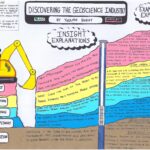
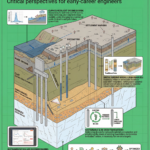
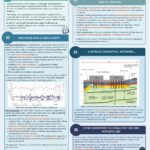
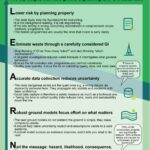
AGS Early Careers Poster Competition 2026 – Top Five Industry Insights

- by

The AGS Early Careers Poster Competition is back for a third year and this time, we want to hear your top five takeaways since joining the geoscience industry.

Whether you work on site, in the office or somewhere in between, we’d like you to design an eye-catching poster which showcases your top five industry insights that others should know about. These learnings could be focused on:

  • Site-based experiences
  • Safety challenges
  • Office or project management know-how
  • Lessons from training, meetings or mentoring
  • Networking and industry engagement
  • Unexpected discoveries

Your poster should be bold and colourful and aim to inspire both industry professionals and those entering the industry.

The winner will receive a £100 Amazon Voucher, free entry to the AGS Annual Conference on 19th March 2026 in London and have an interview regarding their winning entry published in AGS Magazine which reaches over 7,600 industry professionals six times a year. Ten runners up will win free entry into the Annual Conference.  All posters submitted will be displayed at the Annual Conference.

To enter, email your A4 poster alongside your full name and company to ags@ags.org.uk before Friday 30th January.

ENTRY INFORMATION

Posters should be submitted in a high resolution (300dpi), A4 format and can be created by any means, from drawing by hand, utilising photography, to computer-generated artwork.

Entrants should have no more than 10 years industry experience.

Please note that all submitted posters will be printed and displayed at the AGS Annual Conference.

To enter, please email your poster alongside your full name and company to Caroline Kratz at ags@ags.org.uk with the subject title ‘AGS Poster Competition’. The deadline for entries is Friday 30th January at 9pm.

ABOUT THE AGS ANNUAL CONFERENCE

The Annual Conference is the flagship event in the AGS’ calendar. Taking place on 19th March at One Great George Street in London, the event will see over 240 geotechnical and geoenvironmental professionals in attendance.

For further information and to register click HERE or email ags@ags.org.uk

Event News Business Practice Contaminated Land Data Management Development Fund Executive Geotechnical Instrumentation & Monitoring Laboratories Loss Prevention Safety Sustainability

Save the Date – Annual Conference 2026

Save the Date – Annual Conference 2026
2026-03-1919th Mar 2026

We’re pleased to announce that our flagship event, the Annual Conference will return to One Great George Street in London’s Westminster on Thursday 19th March 2026.

Chaired by Alex Lee (AGS Chair and Partner at HKA), this full day, CPD event will feature a series of expert speakers from across the geotechnical and geoenvironmental sector.

The conference will also include short reports from each of the AGS Working Group Leaders who will summarise their aims and accomplishments over the past 12 months, and will conclude with a networking drinks and canapé reception in the Great Hall.

Further information on the event including speaker details and the event theme will be announced in due course.

To register your interest email Caroline Kratz on ags@ags.org.uk


SPONSORSHIP

Sponsoring the AGS Annual Conference offers a unique opportunity to position your company at the heart of the UK’s geotechnical and geoenvironmental engineering community. With a highly engaged audience of industry leaders, technical specialists, and decision-makers, the event provides unrivalled visibility, valuable networking, and meaningful alignment with the sector’s leading voices. Sponsorship not only supports knowledge-sharing and best practice but also demonstrates a clear commitment to advancing the industry.

We have sponsorship opportunities available for both Members and non-Members of the Association who wish to have a presence during the event. For full details of all available packages please click HERE.


News

New AGS Chair and Chair Elect Announced

- by
Tags: Featured

The AGS is delighted to announce that, following the AGM held on 15th May, Alex Lee (Partner at HKA) has been elected as the new AGS Chair, with Geraint Williams (Associate Technical Director at HKA) elected as Chair Elect.

We extend our thanks to Vivien Dent for her outstanding leadership over the past two years as AGS Chair. Vivien will continue to support the Association as Immediate Past Chair alongside Ken Marsh, AGS Treasurer.

Thank you to Sally Hudson for your work over the past 6 years as AGS Officer.

Article

Reviving the Wild in the River Blythe

- by
Tags: Featured

The AGS has been supporting Projects for Nature, an initiative that aims to restore nature recovery in the UK, since 2024. Over the past year, the association has donated almost £6,400 to the Midlands Wild Revival fund which aims to revive wildlife on the River Blythe in Warwickshire.

This article, written by Emily Reilly who works for the Warwickshire Wildlife Trust, explains the progress made to the project so far and how the donation has been used.

The River Blythe Site of Special Scientific Interest (SSSI), extending 45 km through the heart of Warwickshire, is a prime example of a river needing our help to recover from historic human interventions. Artificially straightened, widened, dredged and depleted of nature, the Blythe has suffered in the past. But now, Warwickshire Wildlife Trust are restoring natural processes and bringing wildlife back to the Blythe.

Through the Midlands Wild Revival project, Warwickshire Wildlife Trust are working with landowners, farmers and local communities to restore key sections of the river Blythe to a healthier condition. Positive interventions are being carried out to put meanders back into the Blythe, reconnect the river to its surrounding floodplain, and restore habitats for wildlife along its course.

Natural Flood Management (NFM) techniques are being used bring back features to the river that should occur naturally. Berms and flow deflectors have been installed to re-meander the river, directing water flow back into a wigglier, more variable state. Scrapes and ponds have been created on the floodplain, utilising pieces of un-farmed land to increase flood storage capacity along the river and create fantastic wetland and riparian habitat for plants, invertebrates and wading birds. Tens of thousands of native trees have been planted to enhance biodiversity, reduce soil erosion and restore hedgerows and islands of scrub for wildlife. Large areas of land have been seeded with wildflowers for pollinators.

The positive impacts of river restoration on the Blythe are being seen already, with native wading birds using newly created wetland scrapes, the shape and flow of the river improving where interventions have taken place, and newly restored hedgerows providing valuable habitat for birds and small mammals.

And this is only the start. The ultimate ambition for the Blythe is to continue to restore the river and eventually redefine Warwickshire’s landscape. To create a haven for wildlife where nature can thrive and give people the opportunity to connect with Warwickshire’s nature in ways that, for many, haven’t yet been possible. Warwickshire Wildlife Trust have been laying the groundwork for the rewilding of 750 acres of land along the Blythe since 2021 and are now taking the leap into rewilding history.

The funding support provided to the Midlands Wild Revival project from AGS is essential in helping us carry out this vision. Via Projects for Nature, a Crowdfunder initiative formed by The Council for Sustainable Business, Accenture, Defra, Natural England and the Environment Agency, donations from AGS are helping to continue Warwickshire Wildlife Trust’s work to restore natural ecological processes, improve climate resilience and move towards a more biodiverse landscape along the river Blythe SSSI.

The restoration and rewilding of the river Blythe is an ongoing process, and much work remains to be done. The progress made so far is a hopeful sign of what can be achieved when communities, conservationists, and supporters work together to heal and restore our natural waterways. As the Blythe slowly returns to a more natural state through continued restoration, we can ensure that future generations of people and wildlife will benefit from this vital watercourse.

More information about the Midlands Wild Revival project can be found at: https://www.projectsfornature.com/p/midlands-wild-revival

Image credit Ian Owen 2024

Article

Q&A with Mark Toye

- by
Tags: Featured

Name: Mark Toye
Job title: MD Ground Investigations England & Wales
Company: Igne

Who or what inspired you to join the geoscience industry?
Mrs Kirk, my A level Geology teacher at North Tyneside College.

Can you tell us about your career path to date?
I started as a graduate engineering geologist with Norwest Holst Soil Engineering at Leeds in February 1999 and stayed there through various name changes and base locations till Dec 2015 by then I was Pre-Construction Manager and had focused on tendering and estimating since late 2003.  In January 2016 I joined ESG formerly Soil Mechanics and now SOCOTEC leaving in December 2024 to join Igne as Managing Director for Ground Investigations in England and Wales.

How long have you held your current position for, and what inspired you to apply for the position?
Since December 2024 so at the time of writing this only two months. Impressed by Igne’s growth ambitions, team development focus, and dedication to the ground investigation market.

Some years ago, a good friend – who sadly died far too young – made me realise that you should focus on doing what makes you happy, if that’s not the case it’s time for a role change, company change or career change.

What does a typical day look like?
I think the beauty of the ground investigation industry is that there really are no typical days.

What are the most challenging aspects of your day-to-day role?
Sadly, ground investigation project budgets often don’t reflect the value and benefits they bring. Recruitment and insufficient entrants to the market is also a major challenge.

How do you manage a work/life balance?
Much better than I used to! When I started in the industry, I also played a lot of sport and those outside commitments meant that there were always time pressures particularly when working away, over more recent time I have got better at putting time aside for non-work activities and spending more time with family and friends.

What areas of the industry are you most passionate about?
Improving the quality and safety of the drilling industry.  There is still huge noncompliance with standards and specifications, AGS member companies have a major part to play in this they should only be utilising British Drilling Association Audited drillers when it comes to any ground investigation works otherwise, they are not complying with the current UK Ground Investigation Specification and other British Standards!

What lessons have you learnt throughout your career?
You can learn an awful lot from talking to an experienced driller and I have worked with some great individuals over the years – but don’t necessarily believe everything they tell you!

What can AGS Members do to address the gender imbalance and improve diversity within their organisations?
Treat everyone as individuals and celebrate the career successes of the remarkable women already in the industry to inspire others. Be engaging, honest, and free of preconceptions when interacting with all people.

How can AGS Members support graduates and early career professionals who are entering the industry?
Provide more training and work experience opportunities to help graduates understand the various aspects of the geotechnical and geological fields. Many geology graduates are unaware of the industry’s scope and the opportunities it offers. Collaborate with universities to better prepare graduates for the sector and its requirements.

What piece of advice would you give your younger self?
Avoid revolving dance floors – they will lead to persistent knee issues for the next 30 years!

Article Contaminated Land

Monitoring of Turbidity within Groundwater during Piling Operations

- by
Tags: Featured

Article provided by Andrew Tranter, Associate Technical Director at RSK

Turbidity is defined as the measure of the relative clarity of a liquid.  It is caused by the presence of organic and inorganic particulates from local sediments/rocks as well as microbial organisms that have been picked up/transported within the groundwater (Ref 1).

Turbidity is routinely monitored at groundwater abstraction wells (as required by the Drinking Water Inspectorate) for potable water supplies as an indicator for microbial organisms, particularly cryptosporidium. The shutdown of the public water supply at Brixham in May 2024 due cryptosporidium illustrates how severely water companies can be impacted by cryptosporidium.   Also, high turbidity levels may negatively impact on the water treatment process.  However, turbidity measurements cannot distinguish between microbial or mineral particulates, and therefore activities that could lead to an increase of mineral particles within the groundwater, such as piling, are undesirable.

In the first instance, a piling risk assessment should be undertaken in line with the Environment Agency’s updated guidance (Ref 2) (which has just been published) if piling operations have the potential to impact on a groundwater abstraction well (e.g. the site is located within Zone 1 of a Source Protection Zone (SPZ)).  A number of measures may be considered to mitigate risk, for example using a different piling technique or altering pile depth.  However, the Environment Agency will often request that groundwater monitoring is carried out when the site is located within Zone 1 of a SPZ, including the measurement of turbidity to confirm that the pilling operations have not adversely impacted the aquifer and abstraction well.

The AGS previously published ‘Assessment and Mitigation of Turbidity Risks from Piling’, dated July 2023 which focussed more on turbidity risk assessment but should be read in conjunction with this article.  There is currently no UK guidance on how turbidity should be monitored during piling operations, and therefore a discussion on the various instruments available, and important considerations in relation to the sampling methodology, is provided below.

Instruments for Monitoring Turbidity

Turbidity is measured using instruments that detect the amount of light scattered by particulates. High levels of scattered light correspond with higher levels of particulates and turbidity.  A range of light sources can be used depending on the technique, such as natural light (i.e. Secchi discs used for surface water measurements); tungsten lamps (i.e. used in bench top meters) and light emitting diodes (LED), which are often utilised within modern instruments used for groundwater sampling.  The results can be expressed in different units which are dependent on the technique, the most common are nephelometric turbidity units (NTU) or formazine nephelometric units (FNU), which are considered to be equivalent (Ref 3).

Instruments used for measuring turbidity within groundwater can be split into three broad categories: laboratory bench top meters, field portable meters, and dedicated probes attached to water quality devices.  A comparison of advantages and disadvantages of each technique are provided within Table 1, below.

Table 1: Comparison of different techniques.

Whilst undertaking sampling during piling operations the use of a water quality meter is considered to be the most suitable technique as it provides an immediate result of turbidity that allows rapid assessment of the condition of the aquifer.  A water quality meter can also measure other useful water quality parameters such as dissolved oxygen, electrical conductivity, redox, and pH.  Some water quality meters can also be linked to telemetry for continuous monitoring.

However, before selecting a water quality meter the manufacturer’s specification should be checked to ensure that the turbidity probe is not affected by ambient light or drift from temperature differences when using a flow cell during sampling. On the most sensitive sites, field readings should be cross-checked against laboratory data to confirm suitability of the method.

Borehole Construction

To ensure that the sampling is representative of the actual conditions within the aquifer, it is critical that careful consideration is given to the design and construction of the monitoring wells. Design objectives should be clearly stated as part of the piling risk assessment for the site, which are based upon the development of a conceptual site model (CSM) of realistic contaminant source-pathway-receptor linkages.

At least one well should be positioned hydraulically up-gradient, and two down-gradient of the site. If pragmatic within the site constraints, a stand-off from the monitoring well and the area subject to piling is beneficial to reduce the potential for the monitoring well to pick up localised disturbance of the soils during piling operations.

Furthermore, keeping a record of the position of the piling rig during piling operations is also useful to aid the interpretation of results.

The slotted section of the monitoring wells (i.e. response zone) should target the water body/depth of interest, including the full pile depth within the water body as defined by the CSM.  To prevent borehole installations from being clogged by fine sediments, a granular annulus is placed around the response zone. For fine sediments of less than 2mm it be also be necessary to wrap a geotextile membrane around the pipe.  However, the membrane should have a pore size of not less than 85 microns so that the target particles can pass through it (majority of suspended particles are <10 microns, and particles >100 microns are unlikely to stay suspended in groundwater (Ref 6). If the strata is fractured rock then geotextile membrane should not be used.  A bentonite seal is required above and below the response zone to prevent mixing from other strata/bodies of water.

Prior to sampling, the monitoring well will need to be thoroughly ‘developed’ in accordance with BS ISO 5667-11 (Ref 5) to remove any drilling fluids/sediment, and allow the surrounding granular filter to settle.  Once ‘developed’ the monitoring well should be left for the conditions to return to equilibrium with the surrounding groundwater, which can take several weeks depending on the surrounding stratum.

Following development and prior to sampling, monitoring wells require purging to remove any stagnant water and ensure that the sample is representative of the aquifer.  The quantity of water purged is dependent on the well construction and hydrogeological conditions.

Sampling method

A number of different techniques have been developed to collect groundwater samples.  Those that require the removal of significant amounts of water during purging and/or agitate the groundwater are not ideally suited for providing a rapid assessment of turbidity as they are likely to cause a temporary increase in the amount of sediment within the monitoring well, e.g. using bailers or HDPE pipe with foot valves.

The low flow/micro-purging technique, as outlined within BS ISO 5667-11, is considered to be the most suitable as it minimises the amount of disturbance to the groundwater, and can target specific depths of interest as defined by the CSM.  The technique involves removing a small volume of water at low flow rate to cause minimal disturbance to the aquifer. The tubing inlet should be placed within the response zone of the well. The monitoring equipment should be kept clean and calibrated in line with the manufacturer’s standards.

The number and frequency of monitoring rounds should be agreed in advance with the Environment Agency/Local Water Authority, and split into three phases: baseline (to characterise the initial condition of the groundwater); during piling (to assess any impact during piling operations); post-piling (to confirm there has been no longer term impact on the aquifer).  It is essential that the condition of the aquifer is well characterised prior to piling operations, and takes into account any seasonal fluctuations in the groundwater levels that may affect turbidity.  Therefore, more than one visit (often multiple visits) will be required to confirm the baseline turbidity concentrations. The frequency of monitoring during the operational phase will be determined by the risk assessment, in lower risk settings a daily reading may be sufficient, whereas in fractured rock close to the abstraction well then real-time monitoring may be required.

Conclusions

In summary, turbidity is an important water quality indicator used by water authorities to determine suitability of groundwater during abstraction.  Monitoring of turbidity is therefore typically required by the Environment Agency where a pilling risk assessment indicates there is a potential risk to the abstraction well (usually when the site is located within Zone 1 of a SPZ).  Turbidity results can be impacted by a wide range of factors, and therefore the following must be considered to ensure that they are reflective of the actual conditions with the aquifer.

  • Meters that can provide rapid on-site testing, and are rugged enough to survive the harsh conditions of a construction site, are preferable to ensure that any issues can be highlighted and acted upon in a timely manner. These need to be kept clean and calibrated in line with manufacture recommendations.
  • It is critical that boreholes are carefully constructed and ‘developed’ to minimise the amount of turbidity in the groundwater caused by the disturbance of the surrounding soils during drilling/sampling so that it is not attributed to the piling operations. The borehole should then be left to settle before monitoring starts, ideally for several weeks.
  • At least one well should be located hydraulically up-gradient and at least two down-gradient of the site so that the impact on the aquifer can be determined during piling operations. If practical (which is often not the case) a stand-off between the location of the monitoring wells and area subject to piling is beneficial to reduce any localised impact from piling on the well.
  • Baseline monitoring should be carried out prior to piling operations in order to characterise the turbidity concentration within the aquifer. To provide confidence in the results and assess any possible variation (e.g. seasonal), often multiple visits will be required.
  • The low flow/micro purging technique is considered to be the most suitable method for monitoring turbidity as it minimises disturbance to the aquifer. However, other techniques can be used with appropriate justification.

Ref 1 US Geological Society www.usgs.gov/labs/national-water-quality-laboratory/science/science-topics/turbidity.

Ref 2 CLAIRE, 2025, Piling and Penetrative Ground Improvement Methods on Land Affected by Contamination: Guidance on Pollution Prevention.

Ref 3  Word Health Organisation (WHO), 2017, Water Quality and Health Review of Turbidity: Information for regulators and water supplier.

Ref 4 British Standard, first published 2015, Code of Practice for Ground Investigations, ref BS5930+A1:2020

Ref 5 International Standards Organisation (ISO), 2009, Water Quality- Sampling Part 11: Guidance on Sampling of Groundwaters, ref ISO 5667-11:2009.

Ref 6 Burris et al, 2020.  Tunnelling, Chalk and turbidity: conceptual model of risk to groundwater public water supplies.  P. Burris, C. D. Speed, A. E. Saich, S. Hughes, S. Cole and M. Banks.  Quarterly Journal of Engineering Geology and Hydrogeology

Article Geotechnical

Debunking Social Value Myths: What It Is and Why It Matters

- by
Tags: Featured

Article by Kalisha Sejpar (Associate, Ramboll)

At its core, Social Value is about maximising the positive impact that buildings, places and infrastructure have on society. It goes beyond just completing a technically sound project; it considers how that project contributes to local communities, the environment, and the economy in a meaningful way.

Social Value has become a crucial aspect of the engineering and construction industries in recent years, shaping the way projects are designed, delivered, and measured. However, its principles and applications are not well recognised across the majority of the ground engineering sector.

This article addresses some of the most common misconceptions about Social Value, providing clarity on what it means, why it is important, and how professionals in our industry can integrate it into their work.

Myth 1: “Social Value only applies to public contracts”

One of the most common misconceptions about Social Value is that it is only relevant for public sector contracts. This belief stems from the early adoption of Social Value policies in public procurement, such as the Public Services (Social Value) Act 2012, where the government first set out expectations for procurement decisions to take into account wider social, economic, and environmental impacts. The Social Value Model was then legislated in 2020, as outlined in Procurement Policy Note PPN 06/20, which solidified the commitment to embedding social value into the award of public sector contracts, assigning a minimum 10% weighting to it in tender evaluations. Social Value has since become an essential consideration for public sector clients, policymakers, and communities.

However, many private sector organisations are increasingly adopting Social Value principles voluntarily, driven by shifting public expectations, stakeholder pressure, and a desire to demonstrate corporate responsibility. While there may not be a legal mandate for private sector organisations to deliver Social Value, developers and investors are recognising the long-term benefits of integrating Social Value into their projects

For businesses, embracing Social Value is not only an ethical choice but a competitive one, as it helps improve reputations, build trust, and ultimately, win work across both public and private sectors.

—————-

Myth 2: “Social Value is just about STEM and job creation”

While STEM outreach and job creation are an important aspect of Social Value, they are just pieces of the puzzle. Social Value encompasses a much wider set of themes, enabling a range of social, economic, and environmental impacts. This can include enhancing physical and mental well-being, delivering environmental benefits, fostering diversity and inclusion, supporting SMEs (Small and Medium-sized Enterprises) and VCSEs (Voluntary, Community and Social Enterprise), improving educational and training opportunities, and engaging in co-design and delivery with communities. These are all critical components of Social Value that address the broader needs of communities, the environment, and society at large.

The broad scope of Social Value offers opportunities for a wide range of businesses and professionals to contribute. Contractors, consultants, and suppliers alike can integrate Social Value into their operations through various means. Social Value is also not limited to large businesses or those with specific expertise; it can be embedded into everyday practices across the supply chain, enabling businesses of all sizes to make a meaningful contribution.

The exact social value that a project delivers will depend on the needs of the local community and the priorities of the client. Social Value should be tailored to the people most impacted by the development, with outcomes defined based on local needs and the specific context of the project. This means that Social Value is not a one-size-fits-all solution; rather, it must be relevant and meaningful to the community in which the project takes place, focusing on the issues that matter most to those directly affected.

—————-

Myth 3: “Designing/ building a hospital or school counts as our Social Value”

Another common misconception is that simply contributing to the construction of projects such as hospitals or schools automatically counts as delivering Social Value.

A fundamental principle to recognise is that Social Value involves creating additional value beyond the intrinsic value that is inherently tied to fulfilling the primary purpose of a contract. So, although the creation of a school or hospital can be a significant step towards improving communities’ access to education and healthcare, Social Value goes beyond merely providing infrastructure. It’s about embedding positive, additional impacts throughout the project’s lifecycle, adding social, environmental, and economic benefits that extend beyond the primary objective.

This concept can be broken down into three distinct categories:

Inherent Social Value relates to the direct and primary impacts that an activity or contract delivers as part of its core purpose. For example, providing health services through the construction of a hospital is an inherent benefit, directly contributing to the community’s healthcare needs.

Embedded Social Value typically involves an organisation’s ‘business as usual’ activities that contribute to social value, typically delivered through practices like apprenticeship schemes, environmental policies and supply chain engagement. For example, sustainable supply chain practices, such as sourcing materials from local suppliers to reduce carbon emissions and support local economies.

Additional Social Value goes beyond both inherent and embedded value and involves intentionally creating extra, measurable societal benefits that are not an intrinsic part of the core service. For example, encouraging staff to volunteer in community projects, like creating a green space local to the hospital site.

When delivering Social Value through contracts, Inherent Social Value cannot be claimed, however Additional Social Value, and where appropriate Embedded Social Value, can be claimed, but only for the tangible benefits that arise directly from the contract in question.

—————-

Myth 4: “We already do CSR, so we’re delivering Social Value”

Corporate Social Responsibility (CSR) reflects a commitment by businesses to operate responsibly, ensuring they adhere to ethical standards and hold themselves accountable for their actions. CSR is primarily voluntary and self-regulatory. It predominantly revolves around internally focused initiatives within business operations, with strategies often self-determined, guided by an organisation’s own priorities rather than being shaped by the needs of a particular community, client, or contract. CSR activities can be valuable, but they do not necessarily meet the criteria for Social Value especially as they often comprise one-off endeavours that do not necessarily occur where contracts are being delivered. However, where relevant, they can contribute to Embedded social value.

Social Value, by contrast, is contract-specific, locally focused, and embedded into the delivery of a project or service. It requires organisations to consider how they can maximise tangible, lasting benefits for the communities directly affected by their work.

For example, an organisation may have a CSR initiative that funds tree planting in various locations nationwide. While beneficial, it’s a broad, self-directed effort. In contrast, to deliver Social Value on a local infrastructure project, the organisation can plant trees in nearby urban areas, working with local schools to educate students on biodiversity and climate resilience. This ensures the impact is place-based, directly benefiting the local community and aligning with project-specific goals.

The key distinction therefore is that Social Value is an integrated and accountable part of project delivery, not just a standalone corporate initiative.

—————-

Myth 5: “Social Value is not my responsibility – someone else will deal with it”

Social Value is everyone’s business. Regardless of role, sector, or project stage, all professionals involved in the built environment—including geotechnical and geoenvironmental specialists—have a part to play in delivering meaningful benefits to society.

Social Value is not limited to those in client-facing roles or those directly involved in community engagement, or on-site construction – it is relevant to all services including consultancy, design, investigation, and construction, and applies equally to those conducting early-stage desk studies as to those delivering on-site groundworks.

Social Value can take many forms across the geotechnical and geoenvironmental sector. Some examples include:

  • Contractors working in an economically deprived area can create targeted employment and training opportunities for local workers from disadvantaged backgrounds;
  • Consultants can share findings on geotechnical hazards or contamination risks with local communities, helping to raise awareness of climate resilience and environmental sustainability, and helping communities feel more connected to the development process;
  • Contractors can minimise environmental disruption by adopting low-carbon ground improvement techniques, sourcing locally sourced materials and implement construction practices that minimising noise;
  • Consultants can implement solutions that minimise soil disturbance, allowing for the preservation of trees and green areas, which supports biodiversity and provides space for community activities;
  • Consultants and contractors can volunteer time for example restoring local wetlands, or providing technical advice on local geotechnical or geoenvironmental hazards, involving residents and improving overall community wellbeing

While some of these outcomes are often by-products of good engineering practice, there is now a growing expectation—from governments, clients, and the public—that they be planned, measured, and maximised.

Embedding Social Value into projects is not about reinventing roles as professionals but rather being intentional about maximising positive outcomes.

—————-

Myth 6: “There’s no contractual commitment to Social Value”

Another common misconception is that Social Value commitments made during tender are not enforceable and that there are no real consequences for failing to deliver them. However, this is increasingly not the case. Clients, both public and private sector, are strengthening their approach to Social Value by integrating mechanisms into contracts.

For example, many contracts include performance monitoring, with Social Value within Key Performance Indicators (KPIs). This means that not delivering on your commitments can lead to removal from the project/framework and significant reputational damage. Others go further by enforcing financial penalties for non-delivery.

Going forwards, under the Procurement Act 2023, contracting authorities will have greater flexibility to assess supplier performance over time, meaning that failure to embed and deliver Social Value could lead to exclusion from future contract opportunities. Similarly, government guidance for the new Social Value model is to include all social value commitments in the contract either as contract terms, key performance indicators, or performance indicators.

With growing scrutiny, businesses must take Social Value commitments seriously. This requires moving beyond vague promises and ensuring that measurable, meaningful outcomes are delivered and performance evidenced at regular intervals throughout the contract lifecycle.

—————-

Myth 7: “It’s all about maximising SROI”

There is a common misconception that Social Value is primarily about achieving the highest possible Social Return on Investment (SROI) or maximised financial figures. While monetisation can be a useful tool in measuring Social Value, it is not the sole focus.

Social Value measurement frameworks and reporting tools such as TOMs (Themes, Outcomes and Measures) system have been developed to provide structured methodologies; some of these frameworks include financial proxies—assigning a monetary value to social impacts to help quantify their relative importance. However, this approach, while useful for benchmarking and comparison, does not capture the full picture of Social Value.

A growing concern is the tendency to focus too heavily on headline financial figures, leading to what some refer to as “social value washing”—prioritising impressive-looking numbers over meaningful, long-term impact. This trend mirrors similar challenges seen in other sustainability fields, such as carbon reduction, where measurement frameworks sometimes overshadow the real objective. Social Value should not become a numbers game but should remain centred on genuine, place-based benefits that create lasting change.

Ultimately, Social Value is about people, not just numbers. To ensure genuine impact, organisations must look beyond financial figures and focus on creating meaningful, measurable, and lasting change within communities.

—————-

Bonus Myth: “Social Value is just a passing trend”

Despite international trends where some governments prioritise economic growth over strong social policies, the UK is taking a distinct approach—embedding Social Value as a core part of procurement strategy rather than treating it as a passing trend.

With the Procurement Act 2023 shifting procurement decisions towards selecting the “most advantageous tender”—rather than simply the “most economically advantageous”—Social Value is becoming even more integral to procurement strategies.

The National Procurement Policy Statement (NPPS) reinforces this commitment by prioritising the government’s missions in procurement, ensuring public spending delivers not just value for money but also tangible economic, social, and environmental benefits. The new Social Value Model requires that organisations bidding for public sector contracts actively contribute to these priorities, moving beyond simply meeting baseline contract requirements.

Therefore, with evolving legislation and increasing public demand, Social Value is here to stay and grow.

Social Value directly addresses the challenges facing our industry today, from workforce shortages and sustainability targets to inclusion and economic resilience. This presents a significant opportunity for organisations and individuals to play an active role in shaping positive outcomes. Whether through skills development, sustainable practices, or community engagement, think about how you can support Social Value objectives and advocate for these principles within your team to ensure they are embedded into everyday decision-making and project delivery.

References

PPN 002: https://assets.publishing.service.gov.uk/media/67ae1529e270ceae39f9e1a0/2025-02-11_PPN_002_The_social_value_model.docx.pdf