 Search
Soil is a critical component of healthy, functioning ecosystems, playing a vital role in agriculture, water quality, and flood risk management, biodiversity and carbon storage. Soil underpins the new government environmental agenda, particularly in ‘ensuring nature recovery, supporting farmers to ensure Britain’s food security and protecting communities from flooding’.
Almost every construction project generates surplus soil. Once soil becomes a waste, particularly where contaminants are also present, it’s management often becomes more complex. Sustainable and effective soil management pays dividends in both cost reduction and project efficiency. Good soil management also contributes to the 10% Biodiversity Net Gain, a requirement for all new developments in England.
The reuse and reduction of surplus soil generated by development is supported by construction professionals and links directly to the Waste Hierarchy and contributes to the circular economy. This approach prevents the need for surplus soil going to landfills. However, this is not an easy task. If we are to do better, we need to:
- Raise the profile of soil
Greater effort is needed to elevate the importance of soil in the minds of a wider range of stakeholders across the industry. While there is broad agreement that soil is a valuable and non-replaceable resource, its benefits are often difficult to quantify. Its role in broader environmental priorities—such as nature recovery and biodiversity—is also frequently undervalued. In addition, soil is not given significant consideration within Biodiversity Net Gain (BNG) frameworks, and there are currently no mandatory requirements to address soil in this context. More broadly, the absence of direct regulations governing soil management further limits its prioritisation in practice.
Changing people’s perceptions is never easy. To address this, the construction industry should take a more coordinated and proactive approach:
- Continue to engage with government: Ongoing lobbying is essential to ensure soil is better reflected in policy and regulation. Proposed changes—such as updates to the National Planning Policy Framework and initiatives like the Brownfield Passport—have the potential to drive improved soil management practices in the future.
- Develop and share case studies: There is a need to collect and promote clear, accessible examples that demonstrate the benefits of good soil management. These should target a wider audience—not only consultants and contractors, but also clients, developers, and funders—and be disseminated through appropriate and effective channels.
- Integrate soil into environmental assessment frameworks: Established methodologies such as BREEAM (including BREEAM Infrastructure), and LEED should be encouraged to more explicitly incorporate soil within their assessment criteria.
- Enhance education and awareness: Greater efforts are needed to educate biodiversity specialists, ecologists, and other professionals involved in the design and delivery of green infrastructure and nature recovery projects, so they better understand and value the role of soil. This should support the reuse of soils, particularly soil types which are needed to support ecological enhancements.
- Promote interdisciplinary collaboration: Stronger collaboration between professionals involved in soil management and use is critical. This requires effective networks to facilitate communication and knowledge sharing. Many organisations such as the British Society of Soil Science, Chartered Institute of Waste Management, CIRIA, the Institution of Environmental Sciences, and the Society for the Environment Soils and Stones Group etc., are already working towards this goal. While these bodies have made significant contributions over the past decades, their roles are not always clearly understood. Initiatives such as CIRIA’s Soil Community of Practice, including its roundtable meetings, aim to improve coordination and dialogue across the sector. Summaries of these discussions are available at: www.ciria.org/SOILCOP/
- Improve access to knowledge and resources: There is a need to make soil management information more accessible to those seeking to learn and apply good practice. At present, the CIRIA Soil Community of Practice web portal (www.ciria.org/SOILCOP/) is only dedicated platform providing consolidated guidance on soil management for UK construction projects.
- Improve our understanding and appreciation of what soil means to different professionals.
CIRIA’s Soil community of practice recently compiled a list of soil definitions from different construction professionals (Table 1). Soil is also defined in a number of guidance documents such as British Standards, CIRIA reports, etc.
| Definitions | Professionals | Reference |
| Soil is a mixture of mineral and organic matter that contains air, water, and micro-organisms. It provides a medium in which plants grow, a habitat for animals, and storage for water. | Ecologists | What is soil? COSMOS-UK web site
|
| Soils is the combination of weathered minerals, organic materials and living organisms and the interactions between these.
|
Natural capital specialists including economists | Enabling a Natural Capital Approach guidance
|
| Where soil occurs, it is the topmost layer of the land, forming the interface between the underlying geology and the atmosphere and is a component of terrestrial ecosystems, providing a medium for the transmission
of carbon, water, nutrients, and the growth of plants.
|
Environmental impact assessors | A New Perspective on Land and Soil in Environmental
Impact Assessment https://www.iema.net/media/3xejdu0u/2022-iema_land_and_soils_guidance.pdf
|
| Soil consists of complex structures of soil grains separated by pores, channels and chambers. The solids are chemically active and are slowly but continually changing in composition and shape. | Soil scientists | What is soil? British Society of Soil Science web page https://soils.org.uk/faqs/
|
| Soil is the natural medium for the growth of plants. It is also a natural body consisting of layers that are composed of weathered mineral materials, organic material, air and water. | What is soil? Food and Agriculture Organisation of the United Nations
https://www.fao.org/soils-portal/about/all-definitions/en/
|
|
| Soil is a biologically active complex mixture of weathered minerals, organic and inorganic compounds, living organisms, air and water which provides the foundation for life in terrestrial ecosystems. | The Scottish Soil Framework 2009
|
|
| Soil is an engineering material consisting of mineral particles, organic matter, etc which provides support for structures like buildings and bridges, and is used for construction purposes such as building roads, dams, and embankments. | Civil engineers/
Geotechnical engineers |
|
| Soil is the result of weathering processes that occur on the earth’s surface where the atmosphere meets the geosphere and hydrosphere.
|
Geologists | Soil Parent Material Model – British Geological Survey
https://www.bgs.ac.uk/datasets/soil-parent-material-model/
|
| Soil is a growing medium for plants in gardens. Soil is also material they often see on construction sites. | General public |
One of the key challenges in current soil management practices is that different professionals often think and operate in silos. While it may not be possible to establish a single, unified definition of soil, fostering a broader appreciation of what soil means to different stakeholders can help reduce misunderstandings. This shared awareness can support more coordinated and effective management approaches, encouraging individuals to consider soil beyond their immediate needs. Ultimately, such a shift would lead to more holistic and improved soil management practices.
- More research on how soil function benefit construction projects
There is broad consensus that soil supports a wide range of ecosystem services and plays an important role in mitigating climate change impacts. However, further research is needed to clearly demonstrate and quantify these benefits—particularly over the short to medium term—in the context of construction projects. For example, more evidence is required to determine how much biodiversity net gain will be achieved if a given volume of surplus soil were reused within a project.
- More real commitment from the industry and actions
There is no shortage of opportunities within industry to discuss soil-related issues. In recent years, numerous well-attended events have been organised by professional institutions, trade bodies, and other organisations. However, both the speakers and attendees at these events tend to be drawn from the same group of individuals, and the topics covered are often repetitive. As a result, engagement remains limited to a relatively small segment of the industry, and these discussions rarely generate new insights or meaningful progress.
A number of guidance has been developed in this area e.g.
- C809 Sustainable management of surplus soil and aggregates from construction. The report was published in 2023 and contains a series of flow charts which explain soil for onsite recovery or reuse. Figure 1 is for England and Wales. There are similar charts for Scotland and Northern Ireland.
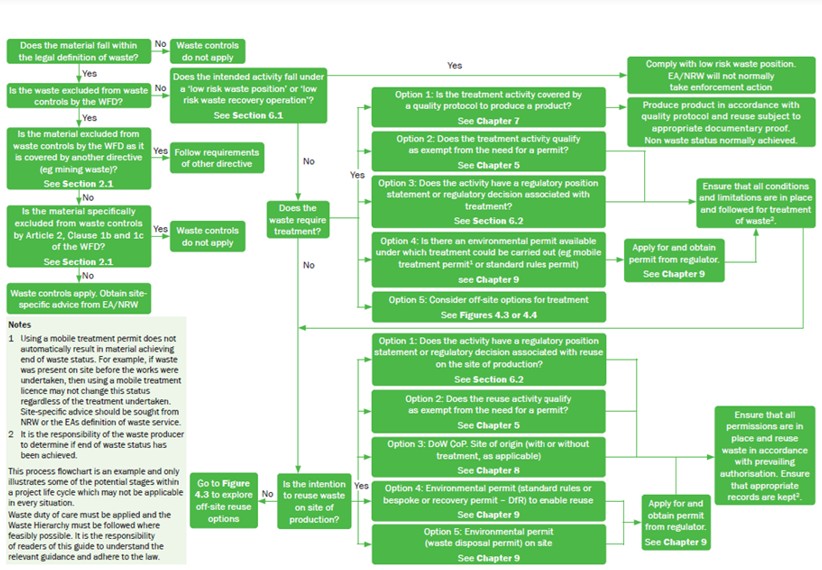
Figure 1 On site recovery/ reuse for England and Wales
- The Society of the Environment Soils and Stones Project has been working on this subject for many years. Last year, the project launched the Soil Management Hierarchy for Development sites (Figure 2)
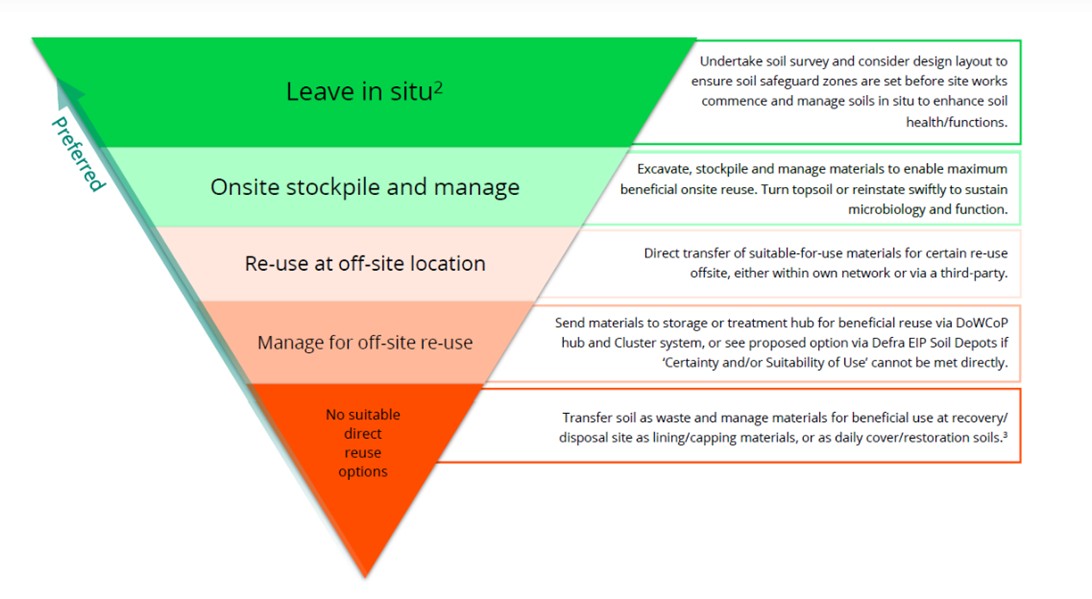
Figure 2 The Soil Management Hierarchies for Development Sites developed by SocEnv Soils and Stones Project
- The ReCon Soil project that aims ‘to halt the amounts being paid by the industry to dispose of waste soil from building sites across the UK and France’ finished in 2023. The project has developed a flow chart which focuses on where surplus soil can go order to comply with the different types of permits and regulations.
Although these existing resources are valuable, they do not address how soil should be managed at different stages of a construction project. To address this, CIRIA is developing a project aimed at bridging the gap between regulation, policy, compliance, and on-the-ground implementation. The project will support practitioners to make decisions so that the right soil is used or disposed in the right place and the right time. The key objectives of the work are:
- Preserve and enhance soil functions: This includes not only ensuring soil can meet structural requirements but also maintaining and improving its broader functions for use on or off-site—such as supporting nature recovery, enhancing biodiversity, and contributing to flood mitigation—throughout all stages of a project.
- Select appropriate reuse options: The guidance will support more informed decision-making on soil reuse by outlining:
- the range of available on-site and off-site reuse options.
- the key practical considerations and constraints associated with each option; and
- opportunities to treat, improve, or otherwise modify soils to make them suitable for specific reuse scenarios including bio-cropping to reduce fertility
- how specifications can be written to maximise soil reuse (there are more soils suitable as a growing medium than BS3882 multi-purpose topsoil) .
Overall, the aim is to provide clearer, more actionable guidance that enables better soil management outcomes in practice.
If you want to be involved in this project or CIRIA’s Soil Community of Practice, please go to www.ciria.org/SOILCOP/ or contact Joanne Kwan at CIRIA (email:joanne.kwan@ciria.org)
Article by Joanne Kwan, CIRIA Senior Research Manager and Sustainable Land Resue Programme Lead, CIRIA, Marc Perry, Principal Geo-environmental Engineer Sustainable Soils Technical Lead, RSK Geoscience and Chairman of CIRIA Soil Community of Practice, Claire Dickinson, Independent Consultant